How Much Does Solar Battery Storage Cost?
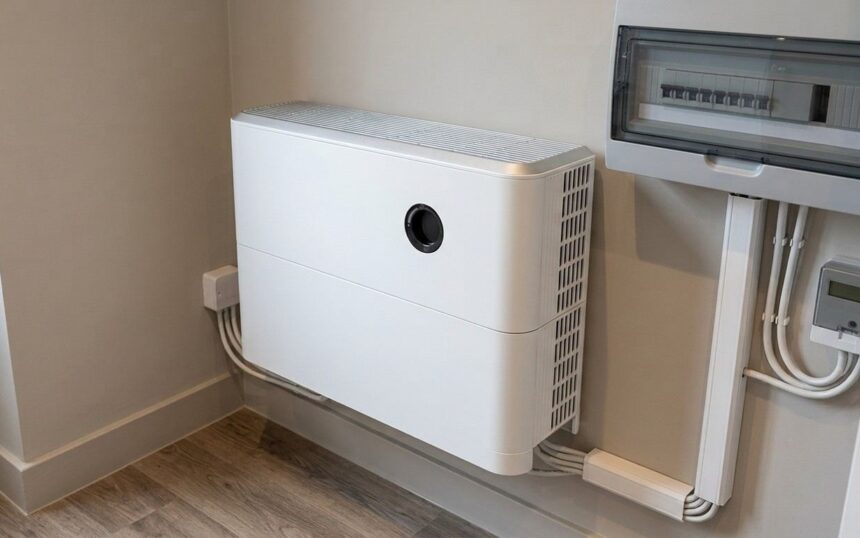
Solar battery storage in the UK typically costs between £3,000 and £8,000. This covers a fully installed home battery system. Prices depend on battery size, brand, and installation complexity.
Most homeowners choose a battery between 5kWh and 10kWh. That’s enough to power an average home overnight. We’ll break down exact costs, savings, and what affects your final price below.
Key Takeaways
- Solar battery storage costs £3,000–£8,000 fully installed.
- Battery size and brand affect price the most.
- Average payback period is 6–10 years.
- Government incentives can reduce your upfront cost.
- Batteries pair well with existing solar panel systems.
What Determines Solar Battery Storage Cost?
Several factors shape your final price. Understanding these helps you budget accurately.
- Battery capacity – Larger batteries cost more but store more energy.
- Brand and technology – Premium brands like Tesla or LG cost more.
- Installation complexity – Retrofits often cost more than new-build installs.
- Inverter compatibility – You may need a hybrid inverter upgrade.
- Location and access – Difficult installations increase labour costs.
Solar Battery Storage Cost by Size
Here’s a quick comparison to help you choose the right size.
| Battery Capacity | Average Cost | Suitable For |
| 2.5kWh–5kWh | £3,000–£4,500 | Small homes, light evening use |
| 5kWh–10kWh | £4,500–£7,000 | Average family homes |
| 10kWh+ | £7,000–£10,000+ | Large homes, high energy use |
Most Staffordshire households we work with choose a 5kWh–10kWh system. It balances cost against real-world savings well. You can see the full range we offer on our battery storage service page.
How Much Does Battery Installation Cost Separately?
Installation typically adds £500–£1,500 to your total cost. This depends on wiring complexity and your existing setup.
Homes with existing solar panels usually pay less. The infrastructure and inverter connections often already exist.
New-build installations combining panels and batteries can save money overall. You avoid paying for two separate call-outs.
Does Battery Size Affect Long-Term Savings?
Yes, bigger batteries generally save more money over time. But bigger isn’t always better for every household.
A 5kWh battery suits most two-to-three-bedroom homes well. Larger families or high energy users benefit from 10kWh or more.
We always recommend matching battery size to your actual energy usage. Oversizing wastes money on unused capacity.
What’s the Payback Period for Solar Battery Storage?
Most solar batteries pay for themselves within 6–10 years. This depends on your energy usage and electricity prices.
Batteries paired with solar panels see faster payback. You’re storing free solar energy instead of buying it back later.
Rising energy prices are shortening payback periods further. Many customers now see returns within 5–7 years.
Are There Grants or Incentives for Solar Battery Storage?
Yes, several schemes can reduce your upfront costs significantly.
- Smart Export Guarantee (SEG) – Get paid for exported energy.
- 0% VAT – Solar batteries qualify for VAT relief until 2027.
- ECO4 Scheme – Available for eligible low-income households.
Check current eligibility carefully, as schemes change regularly. We can help you identify what you qualify for.
Solar Battery Storage vs No Battery: Is It Worth It?
Here’s how battery storage compares against solar panels alone.
| Factor | Solar Only | Solar + Battery |
| Self-use of solar energy | 30–40% | 60–80% |
| Grid dependency | Higher | Lower |
| Energy bill savings | Moderate | Significant |
| Upfront cost | Lower | Higher |
| Protection from price rises | Limited | Strong |
Adding a battery roughly doubles your solar self-consumption rate. That means bigger savings on every energy bill.
Real-World Example: Staffordshire Family Home
We recently installed a 6.5kWh battery for a family in Staffordshire. Their existing solar panels weren’t being fully used.
Before the battery, they used just 35% of solar generated. After installation, self-use jumped to 72% within weeks.
Their estimated annual savings increased by roughly £280. Full payback is expected within eight years.
How Do I Choose the Right Battery Size?
Follow these steps to find your ideal battery capacity.
- Check your daily energy usage – Look at your smart meter data.
- Review your solar panel output – Bigger systems can fill bigger batteries.
- Consider future needs – Electric vehicles increase energy demand.
- Get a professional assessment – We calculate this precisely for you.
- Compare warranty and lifespan – Longer warranties often justify higher costs.
Frequently Asked Questions
- How much does a 5kWh solar battery cost in the UK?
A 5kWh battery typically costs £3,500–£5,500 fully installed. Prices vary by brand and installation complexity. - Is solar battery storage worth it in 2026?
Yes, rising energy prices make batteries increasingly worthwhile. Most homeowners see solid returns within 6–10 years. - Can I add a battery to existing solar panels?
Yes, retrofitting is common and usually straightforward. Your inverter compatibility determines exact installation requirements. - What’s the cheapest way to get solar battery storage?
Combining battery installation with new solar panels often costs less. You avoid separate labour and scaffolding charges. - Do solar batteries work during power cuts?
Some batteries offer backup power during outages. This requires specific hybrid inverter configurations, not all systems. - How long do solar batteries last?
Most quality batteries last 10–15 years. Many come with warranties covering this exact period. - Does battery storage increase my home’s value?
Yes, energy-efficient homes with battery storage often sell faster. Buyers increasingly value lower running costs. - What size battery do I need for my house?
This depends on your daily energy usage and solar output. A professional assessment gives the most accurate answer.