South-Facing vs East-Facing Roofs: Which Is Better for Solar?
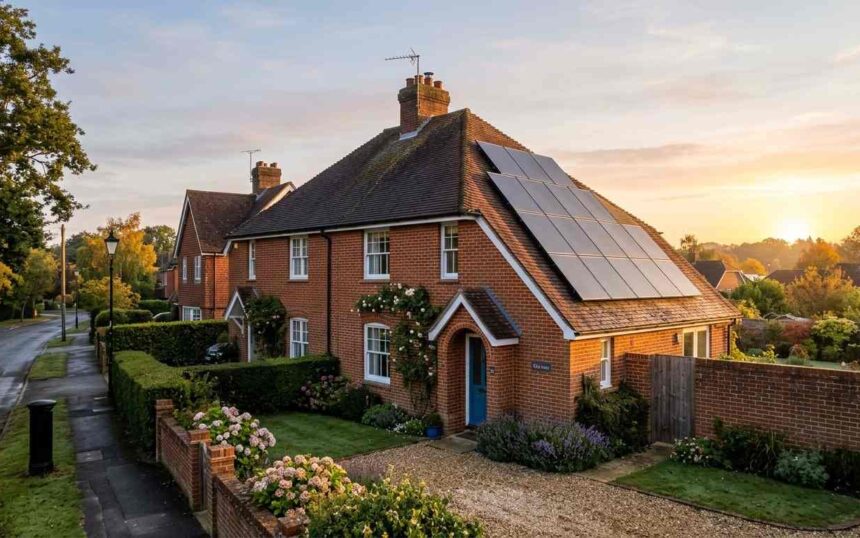
South-facing roofs are generally better for solar panels. They capture the most sunlight throughout the day. This means higher energy output and faster savings.
East-facing roofs still work well, though. They’re ideal if you use more electricity in the mornings. We’ll compare both options in detail below.
Key Takeaways
- South-facing roofs generate roughly 10–15% more energy.
- East-facing roofs suit morning-heavy energy usage.
- Both orientations qualify for solar panel installation.
- Panel angle and shading matter as much as direction.
- A professional survey confirms your roof’s true potential.
Why Does Roof Direction Matter for Solar Panels?
Roof direction determines how much direct sunlight your panels receive. More direct sunlight means more electricity generated.
The sun moves from east to west across the sky. South-facing roofs catch sunlight for the longest continuous period.
This makes south-facing the benchmark orientation. Installers compare all other directions against it.
How Much Energy Does a South-Facing Roof Produce?
South-facing roofs typically produce the highest annual output. This is because they receive sunlight from morning through to evening.
A well-installed south-facing system can generate 100% of its rated capacity. That’s the standard used for solar performance comparisons.
Most UK solar quotes assume south-facing orientation as the baseline. Other directions are measured as a percentage against this.
How Much Energy Does an East-Facing Roof Produce?
East-facing roofs typically produce 15–20% less energy than south-facing ones. They catch strong morning sun but lose afternoon output.
This suits households who use appliances earlier in the day. Think washing machines, dishwashers, or home offices starting early.
Energy generation peaks before midday, then tapers off. Afternoon and evening output is noticeably lower.
South-Facing vs East-Facing: Quick Comparison
| Factor | South-Facing | East-Facing |
| Annual energy output | 100% (baseline) | 80–85% |
| Peak generation time | Midday | Morning |
| Best for | All-day energy use | Morning-heavy use |
| Payback period | Faster | Slightly slower |
| Suitability | Most UK homes | Specific usage patterns |
Neither option is wrong. It depends entirely on your household’s energy habits.
Is West-Facing Better Than East-Facing?
West-facing roofs perform similarly to east-facing ones. Output sits around 80–85% of south-facing generation.
The key difference is timing, not total output. West-facing panels generate more in the afternoon and evening.
This suits households who use more energy after work. Evening cooking, heating, and entertainment all draw more power then.
Does Roof Pitch Affect Solar Panel Performance?
Yes, roof pitch works alongside direction to affect output. The ideal pitch in the UK is around 30–40 degrees.
Steeper or shallower roofs can still work well. Installers adjust panel mounting to optimise the angle where needed.
Flat roofs aren’t a problem either. We fit tilted mounting frames to achieve the correct angle.
What About Shading and Obstructions?
Shading can reduce output more than roof direction alone. Trees, chimneys, and neighbouring buildings all cause shade loss.
Even partial shading on one panel affects the whole string. This is why a proper site survey matters so much.
We always assess shading patterns before recommending a system. It’s often more important than orientation alone.
Real-World Example: Two Staffordshire Homes Compared
We recently installed identical 4kW systems on two nearby homes. One had a south-facing roof, the other east-facing.
The south-facing system generated 3,800kWh in its first year. The east-facing system generated 3,150kWh over the same period.
Both households still saw strong savings against rising energy prices. The south-facing home simply reached payback slightly sooner.
Can I Still Get Solar Panels on an East-Facing Roof?
Yes, absolutely. East-facing roofs are common and perfectly viable for solar. Many UK homes successfully generate significant savings this way.
The key is setting realistic expectations from the start. Your installer should model expected output before you commit.
Pairing an east-facing system with battery storage often helps. It stores morning generation for use later in the day, rather than exporting it cheaply at midday.
How Do I Know Which Roof Orientation I Have?
Follow these simple steps to check your roof direction.
- Use a compass app – Most smartphones include one built in.
- Check satellite maps – Online map tools show roof orientation clearly.
- Look at sun patterns – Note which side gets morning versus afternoon light.
- Book a professional survey – We measure this precisely on-site.
- Ask about east-west split systems – Some roofs benefit from panels on both sides.
Frequently Asked Questions
- Is south-facing always the best option for solar panels?
Generally yes, for maximum total output. But your energy usage pattern matters just as much. - Can I install solar panels on a north-facing roof?
It’s possible but rarely recommended. Output is typically 20–30% lower than south-facing. - Does an east-facing roof qualify for solar grants?
Yes, roof direction doesn’t affect grant or VAT relief eligibility. Only installation type matters here. - Should I add battery storage to an east-facing system?
Often yes, it helps store morning generation. This makes evening energy use more cost-effective. - How much less will I save with an east-facing roof?
Expect roughly 15–20% less generation than south-facing. Your actual savings still depend on usage habits. - Can panels be split across east and west roof sections?
Yes, this spreads generation across more of the day. It’s a popular option for homes without south-facing roofs. - Does cloudy UK weather make roof direction less important?
Direction still matters even under cloud cover. Diffused light still favours south-facing orientation slightly. - What’s the best roof angle for solar panels in the UK?
Around 30–40 degrees works best generally. Installers can adjust mounting to achieve this angle.